What makes bespoke media walls worth it for your UK home?
If you enjoy movie nights, sports, or gaming, your TV area probably gets a lot of attention. Yet many living rooms still have a basic TV stand, trailing wires, and mismatched shelves. Well designed bespoke media walls turn that busy corner into a clean, stylish feature that looks like it was built with your home.
In simple words, a bespoke media wall is a custom-built unit that frames your TV, hides clutter, and adds storage and lighting. It is tailored to your room size, lifestyle, and budget. For UK homeowners, it is also a smart way to add value and a “wow” factor when guests walk in.
This guide walks you through what bespoke media walls are, how to plan one, what they cost in the UK, and how installation works. You will also see why working with a specialist who understands design, joinery, and electrics keeps the whole experience smooth and stress free.
What is a bespoke media wall?
A bespoke media wall is a custom living room wall unit built around your TV and audio system. It usually combines open shelves, closed cabinets, and space for speakers, consoles, and set-top boxes. Everything is measured to fit your exact wall and ceiling height.
Unlike flat-pack TV units, a custom media wall:
- Uses every inch of space, even in tight or awkward rooms
- Hides cables, sockets, routers, and devices neatly
- Can include a feature electric fireplace, LED lighting, or display niches
- Is finished in colours and textures that match your interior
Think of it as integrated AV furniture that looks built-in, not added on later. For modern UK homes where floor space is precious, this makes a big difference.
Step-by-step: Planning your media wall
Good planning is the secret to a media wall that feels luxurious and works perfectly day to day. Use this quick checklist before you speak to a designer or carpenter.
1. Measure your room and TV
- Wall width and ceiling height
- Distance from sofa to wall (for comfortable viewing)
- Location of doors, windows, and radiators
- Size of your TV now and any upgrade you plan in the next few years
2. Map your devices and power
- Number of sockets needed for TV, soundbar, console, set-top box, router
- Internet point or Wi-Fi booster location
- Speaker placement if you use surround sound
3. Choose your style
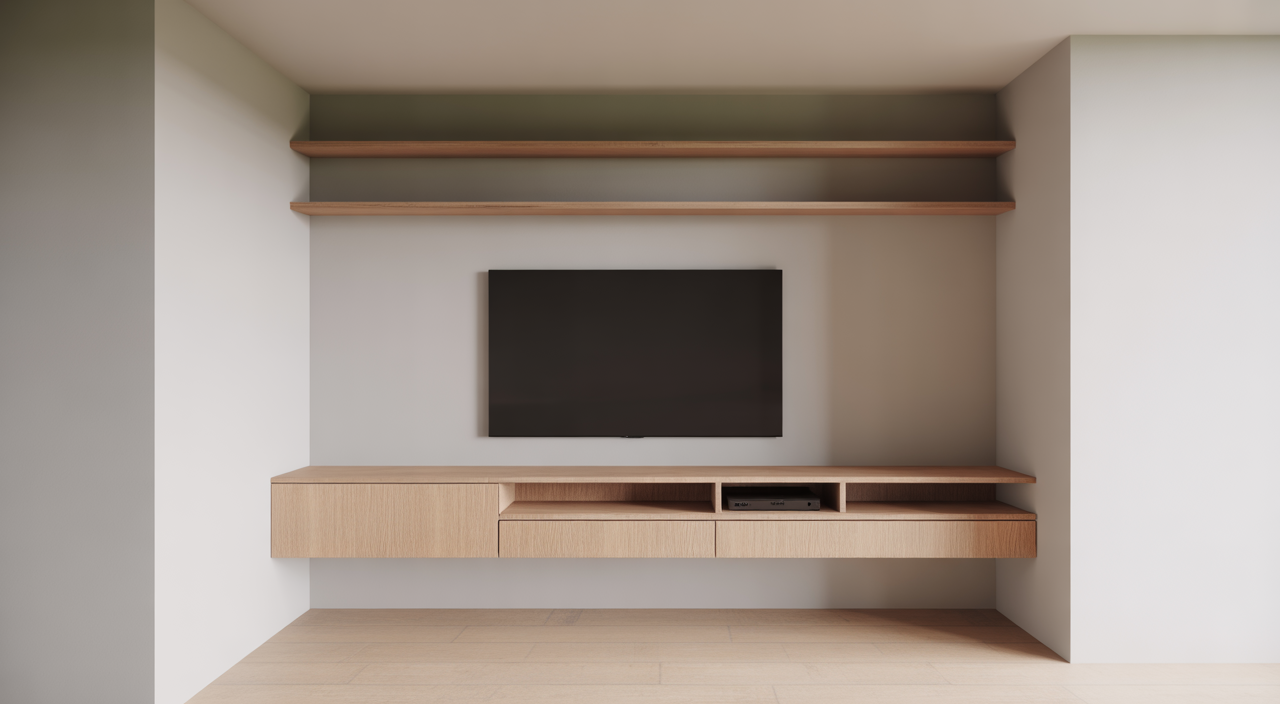
- Minimalist: Floating TV unit, clean lines, hidden handles
- Classic: Framed panels, mouldings, warm colours
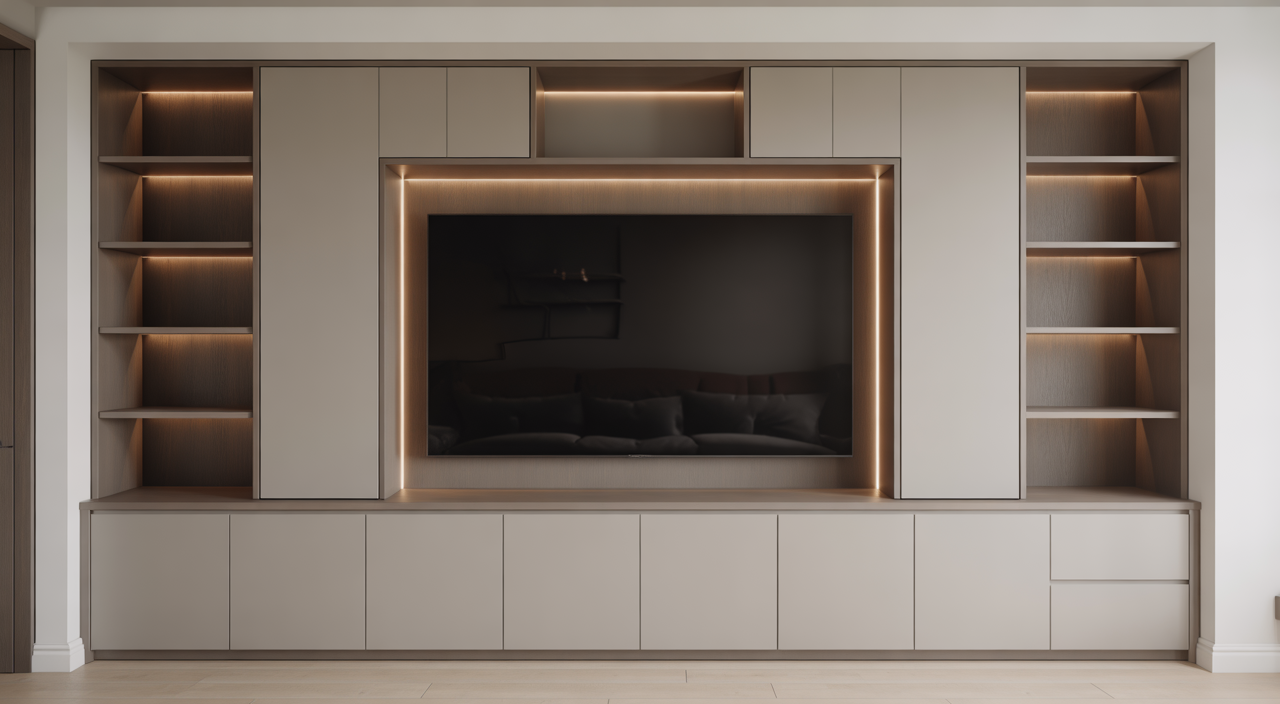
- Modern luxury: Feature fireplace, stone or marble-effect panels, LED strips
4. Decide on storage
- Closed cabinets for games, remotes, and kids’ toys
- Open shelves for books, photos, and decor
- Deep drawers for blankets or bulky items
Writing this down gives your installer a clear brief and helps avoid changes later that can add to cost or time.
How much do bespoke media walls cost in the UK?
Costs vary by materials, size, and complexity, but you can use these rough tiers as a guide.
Entry level
- Simpler layouts with basic shelving and cabinets
- Usually built in high-quality MDF with painted finish
- Basic cable management and a few LED spotlights
Mid-range
- Larger wall coverage, mix of open and closed storage
- Premium finishes like veneers or textured panels
- Integrated fireplace, more advanced media wall lighting ideas
Luxury
- Full wall systems, floor to ceiling, sometimes across two walls
- Statement finishes like stone-effect cladding or high-gloss lacquer
- Complex lighting, sound integration, and custom niches
When comparing quotes, check what is included. Ask about design, materials, painting, electrics, and aftercare. A slightly higher quote from a specialist who handles design and installation end to end often delivers better long-term value.
Design inspiration: Styles that work in UK homes
You do not need a huge living room to enjoy a beautiful media wall. Here are popular layouts that suit different spaces and tastes.
- Floating TV unit with shelves: Great for apartments and compact media walls. Keeps the floor open and easy to clean.
- Full wall cabinetry: Ideal for families who need lots of storage. You can blend your media unit with bookcases and display shelves.
- Media wall with fireplace: Creates a real feature wall. Works well in open-plan living and dining spaces.
- Symmetrical design: TV in the centre, shelves and cabinets balanced on each side. This looks neat and timeless.
- Asymmetrical design: Off-centre TV with staggered shelves and niches. Feels more modern and playful.
Lighting makes a big difference. Consider LED strips behind the TV, inside niches, or under floating shelves to add a warm, cosy glow for movie nights.
Choosing materials and finishes
The right materials keep your media wall looking fresh for years.
- MDF with paint: Smooth finish, flexible colours, and good value. Can be sprayed for a premium look.
- Wood veneer: Adds natural warmth and character without the cost of full solid wood.
- Laminates: Durable and easy to clean, available in many textures like stone, concrete, or timber effects.
- Glass or metal accents: Slim metal profiles and glass shelves can give a lighter, contemporary feel.
Colour-wise, many UK homeowners choose soft neutrals like warm white, greige, or taupe so the wall works with different sofas and rugs over time. Dark navy, charcoal, or deep green can also look stunning if you want the TV area to feel like a cosy cinema corner.
Installation, safety, and UK regulations
A well-built media wall is not just about looks. It also needs to be safe, strong, and compliant with basic UK rules.
Key points to cover with your installer:
- TV and cabinet fixings secured into studs or solid walls
- Proper ventilation around electric fireplace units and AV equipment
- Safe power points and cable routing, following UK electrical standards
- Access panels so you can reach hidden sockets and cables if needed
A professional team will often coordinate with a qualified electrician for any new sockets or lighting. This keeps the work neat and reduces the risk of problems later.
Why use a specialist media wall company?
A dedicated media wall designer brings together interior design, carpentry, and AV knowledge in one place. You get clear drawings, material samples, and a realistic schedule before any work starts.
Specialists also understand how to work cleanly in lived-in homes, protecting floors and furniture while keeping noise and dust to a minimum. This is especially important for busy families or professionals working from home.
If you enjoy reading about how integrated design can streamline projects, you might also like this guide on leveraging design-build services to increase efficiency, which shares useful planning ideas for custom work.
FAQs about bespoke media walls in the UK
1. How long does a bespoke media wall take from design to finish?
For most UK homes, the full process takes a few weeks. Design and approvals can take one to two weeks, depending on how quickly you decide on layout and colours. Manufacturing usually needs another couple of weeks, and on-site installation often takes two to five days, depending on size and complexity.
2. Can a bespoke media wall be fitted in a rented home?
It is possible, but you should always check your tenancy agreement and written permission from your landlord. Some designs can be made as semi-freestanding units that cause minimal damage to walls. However, fixed, full-height units with electrical changes are usually better suited to owned properties.
3. Will a media wall work in a small living room?
Yes, a well-planned media wall can actually make a small room feel larger. By lifting storage off the floor, hiding cables, and keeping everything in one neat line, you remove visual clutter. Slimline cabinets and light colours help the wall blend in rather than dominate the space.
4. Are bespoke media walls easy to maintain?
Most finishes are simple to care for. Painted or laminated surfaces just need a soft cloth and mild cleaner. Built-in cable management means less dust around loose wires. If you choose quality hinges and runners, doors and drawers will also stay smooth and quiet for many years.